Saturday, 27 July 2013

                          Festivals In Spain


Hogueras de San Juan

Alicante, Spain


Each year around June 24th several towns in Spain celebrate the popular festival known as the Bonfires of Saint John(Hogueras de San Juan).

Night is coming from San Juan, Alicante and celebrate it in a very special, 
declared of International Tourist Interest.


Thousands of people take to the streets to enjoy the Bonfires of San Juan, 
Alicante official holidays, dating back to 1928, where the origin of this tradition
of burning useles objects and old to make way for the new with the arrival of 
solstice, marking the beginning of the summer season.


.


La Tomatina

La Tomatina is a food fight festival held on the last Wednesday of August each year in the town of Bunol 

near to Valencia in Spain. Thousands upon thousands of people make their way from all corners of the 

world to fight in this 'World's Biggest Food Fight' where more than one hundred metric tons of over-ripe

tomatoes are thrown in the streets.

The week-long festival features music, parades, dancing, and fireworks. On the night before the tomato 

fight, participants of the festival compete in a paella cooking contest.

Anywhere from 40,000 to 50,000 (reported to be 50,000 in 2012) people come to this huge tomato fight, 

greatly expanding Bunol's normal 9,000 person population.


La Fiesta de San Fermín


La Fiesta de San Fermín(The Festival of Saint Fermin), held every year from July 6-14, began in 1591 when the San Fermin festival, the town fair of Pamplona, Spain and a bull fighting celebration were combined into one large festival. 


Friday, 26 July 2013

                          Religion in Spain

  • Research about 71% of Spanish self-identify as Catholics, 2.7% other faith, and about 24% identify with no religion (9.4% of the total are atheis.
  • Religion in spain

Wednesday, 24 July 2013

CURRENCY-PESETA

 Denomination                      Description                    *TCC Valid Until

    1000.0 peseta                            Year Issued-1979,1982                             Dec 31.2016
                                                       Portrait of Benito Perez Galdos
    5000.0 peseta                             Year Issued-1979,1982                             Dec 31.2016
                                                        Portrait of S.M. el Rey
   

    2000.0 peseta                              Year Issued-1980,1983                              Dec 31.2016
                                                         Portrait of Juan Ramon Jimenez

    200.0 peseta                                Year Issued-1980,1984                              Dec 31.2016
                                                          Portrait of Leopoldo Alas "Clarin"

   500.0 peseta                                  Year Issued-1980,1984                              Dec 31.2016
                                                          Portrait of Rosalia de Castro

   10000.0 peseta                              Year Issued-1985,1987                           Dec 31.2016
                                                          Portrait of S.M. el Rey

  1000.0 peseta                                 Year Issued-1992                                   Dec 31.2016
                                                          Portrait of Hernan Cortes 
                                                          and Francisco Pizarro
       
  2000.0 peseta                                 Year Issued-1992,1996                             Dec 31.2016
                                                          Portrait of Celestino Mutis

   5000.0 peseta                                Year Issued-1992,1996                             Dec 31.2016
                                                          Portrait of Christopher Columbus

 10000.0 peseta                               Year Issued-1992,1996                                Dec 31.2016
                                                         Portrait of H.M. King Juan Carlos
                                                         I and of Jorge Juan


 100 pesetas                                                  200 pesetas- Madrid European Capital of Culture-1992


The PESETA was Spain's currency between 1869 and 2002. It was
 also a de facto currency used in Andorra (which had no national 
currency with legal tender) .

Pesseta is a Catalan word that means piece or fraction which is where the name of the currency come from
with the diminutive form of the word peça.

Spanish peseta commonly does not have any single symbol or special character. The common abbreviations were "Pt", "Pta", "Pts" and "Ptas", and even using superior letter: "Ptas".


However,in 1999 euro (€) replaced the peseta on currency exchange boards. 


On January 2002,  Euro coins and notes were introduced and on 1 March 2002 the peseta lost its legal tender status in Spain and Andorra.


The conversion rate was 1 euro = 166.386 ESP. 


http://en.wikipedia.org/wiki/Peseta


1000.0 peseta
Spain1000.0 banknote
Year Issued - 1979, 1982

Portrait of Benito Perez Galdos
Dec 31, 2016

Tuesday, 23 July 2013

FLAMENCO DANCE


FLAMENCO DANCE

FLAMENCO is a dance and also type of Spanish folk music from the area of Andalusia (southern Spain). Flamenco was first mentioned in literature in 1774. It consists of baile (dance), cante (singing), palmas (handclaps) and toque (guitar playing) . Flamenco is often occurs in four main places  - in the juerga(spree),  in concert venues , in small-scale cabaretand and in the theatre .Besides,for the most part 'Roma' celebration, can occur outside any place a tourist or 'expert on flamenco' would be happen on it.


Monday, 22 July 2013

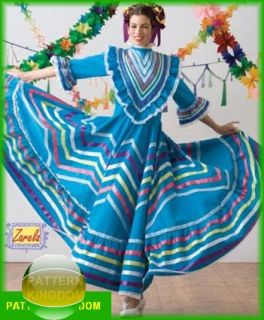
TRADITIONAL DRESS CODE


WHAT IS MEANT BY TRADITIONAL DRESS CODE? DOES SPAIN HAVE THEIR OWN

TRADITIONAL DRESS CODE?OF COURSE EVERY COUNTRY HAVE THEIR OWN

TRADITIONAL DRESS CODE.A TYPICAL TRADITIONAL SPANISH DRESS FOR MEN WOULD BE

BLACK PANTS FITTINGLY WORN AND ALSO SHORT VEST IN DIFFERENT COLOURS WHEREAS

FOR THE WOMENS WOULD WEAR EXQUISITE FRILLY DRESS WITH DIFFERENT TYPES OF

DESIGNER PATTERNS  AND FANCY ITEMS ON THE THEIR DRESSES.

THE MAP AND THE NATIONAL FLAG OF SPAIN


THE FULL MAP OF SPAIN

  • SPAIN IS PLACED AT SOUTHWEST OF EUROPE ALONG THE ATLANIC OCEAN ON THE IBERIAN PENINSULA.


THE NATIONAL FLAG OF SPAIN

NAME     :  ROJIGUALDA
DESIGN  :  THREE HORIZONTAL STRIPES WHICH CONSISTS OF YELLOW AND RED